
Creating a More Effective Marketing Strategy Using the North Star Metric
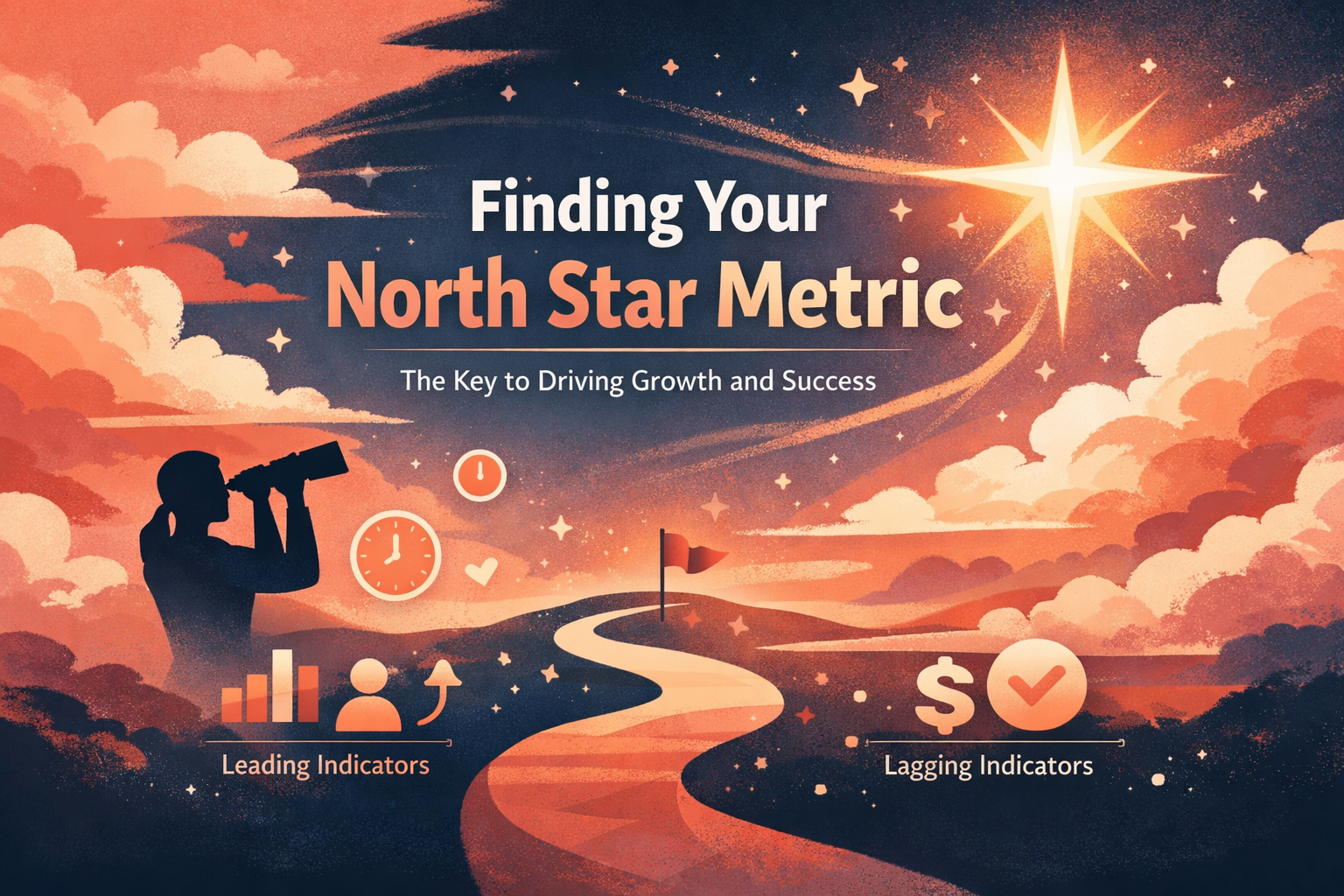
As marketers today continue to be inundated with metrics, we're constantly being asked to prove our worth and our value, but only a few of those metrics drive significant growth. That is why using the North Star Metric (NSM) framework is so important. When a company defines a clear and measurable NSM, it allows teams to work towards one singular goal that ultimately represents a long-term increase in value creation.
The way the NSM accomplishes this is by clearly defining what are called leading indicators and lagging indicators. Leading indicators, (like how many people use an app or trial period offer) serve as predictors of future success. Lagging indicators (like how much money was made) provide proof of past success. The key here is using basic math skills to tie together both the leading and lagging indicators, ensuring that everything done on a day-to-day basis truly contributes to progress toward your defined goal.
However, creating a solid metric for measuring success does not happen in isolation. It also needs to relate to how customers make purchasing decisions. Customers go through various stages of effort when making decisions. These come from extended problem solving, which involves careful consideration of options, to a more limited problem solving, which results in rapid and automatic decision-making. The end result is that the best North Star Metric will represent where your target audience falls within this scale. For example, a subscription-based service such as Netflix uses watch time as their NSM, whereas Airbnb uses the number of nights booked, each are directly related to how valuable an experience the end-user had.
Companies such as Airbnb, Spotify, and Zoom were able to succeed by establishing NSMs that were directly tied to the amount of value provided to each user. On the other hand, MySpace failed to do so. They chose to measure themselves based on vanity metrics such as total users rather than engagement, which ultimately resulted in their eventual downfall.
When developing a comprehensive measurement strategy, you want to ask yourself: What action provides value to my customer? Next, identify the inputs that lead to that activity and measure them consistently.
For more information about North Star Metrics and how to establish a growth strategy, look at the following resources:
https://amplitude.com/blog/north-star-metric
https://mixpanel.com/blog/north-star-metric
By aligning your marketing strategies with a North Star Metric, you are providing a clear direction and purpose for your team. As a result, you'll be able to make better decisions and place your company on a path to long-lasting success.
